
Field Notes · July 6, 2026 · 6 min · By Declan Whitcombe
Inside a pigment consultation: what a good dermatologist checks before touching a spot
The unglamorous twenty minutes before any laser fires is where age spot treatment succeeds or fails. A walk through the real appointment, from dermatoscope to test spot.
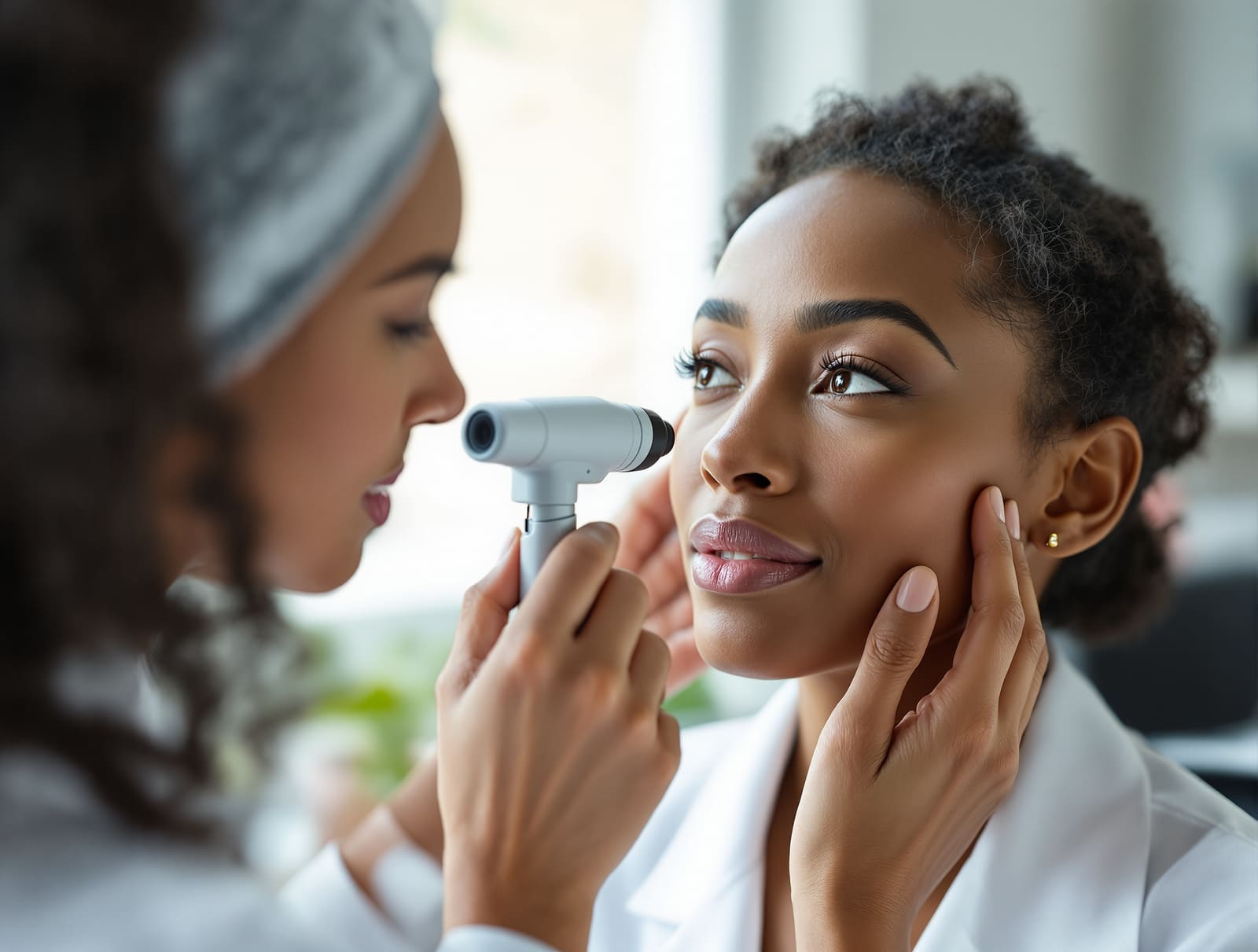
The most important appointment in age spot removal involves no laser, no peel, and no freezing spray. It is the consultation, a twenty-to-thirty-minute visit that determines what the spot actually is, which treatment fits your skin, and whether the whole project is likely to work. Patients often treat it as a formality standing between them and the procedure. The clinicians we spoke with describe it as the procedure's foundation. Here is what actually happens, minute by minute.
Minutes One Through Five: the History
Expect questions before anyone looks at your skin. How long has the spot been there, and has it changed? What medications do you take, since some drugs make skin photosensitive or affect healing? Have you had cold sores, keloids, or previous reactions to procedures? What did you try already, and did anything darken rather than fade? One question matters more than patients expect: what are your sun habits, honestly? A dermatologist who hears about daily unprotected commuting will plan differently than one hearing about a diligent SPF routine, because pigment that gets re-triggered simply returns.
Minutes Five Through Twelve: the Dermatoscope
Next comes the part that quietly justifies the entire visit. A dermatoscope, the small illuminated magnifier pressed against the skin, lets a trained clinician read a spot's internal pattern. A benign solar lentigo shows an even, sharply bordered network. Anything with irregular structure, multiple colors, or a chaotic border earns more scrutiny, because a small percentage of spots that look like age spots are early melanomas, and firing a pigment laser at a melanoma is the worst mistake in this field. It can lighten the lesion cosmetically while the dangerous cells continue growing unseen. If there is any doubt, a good dermatologist biopsies first and cosmetically treats later. A consultation that skips the dermatoscope entirely is a consultation to walk out of.
Minutes Twelve Through Twenty: Matching Treatment to Skin
Only now does the conversation turn to removal. The clinician assesses your Fitzpatrick skin type, the standard scale of how skin responds to sun, because it drives everything. Lighter skin tolerates IPL and Q-switched lasers readily. Deeper skin tones need more conservative settings, different wavelengths, or a topical-first strategy to avoid trading a brown spot for a darker post-inflammatory mark. Expect an honest conversation about numbers: how many sessions, how much per session, what the spot will look like during the week it darkens and flakes, and the realistic odds that it returns without sun discipline.
The Test Spot, and Why You Should Want One
For anyone with medium or deeper skin, or a history of pigment misbehaving, the best consultations end with a test spot: a single low-energy pulse on one lesion, evaluated four to six weeks later. It feels like a delay. It is actually the cheapest insurance in cosmetic dermatology, revealing exactly how your skin heals before anyone commits your whole cheekbone to a device.
What This Means for You
Book the consultation as its own decision, not as a gate to rush through. Bring your product list, your honest sun history, and your questions. Expect a dermatoscope, expect a skin-type conversation, and be glad if you are offered a test spot. The offices that slow you down at this stage are, almost without exception, the ones that get the fading right.