
Advances · July 7, 2026 · 6 min · By Theo Lindqvist
At-home IPL devices and age spots: what the gadget in your bathroom can and cannot do
Handheld light devices promise clinic-style spot fading for a few hundred dollars. The physics behind the lower price explains both why they are safe enough to sell and why the results rarely match the brochure.
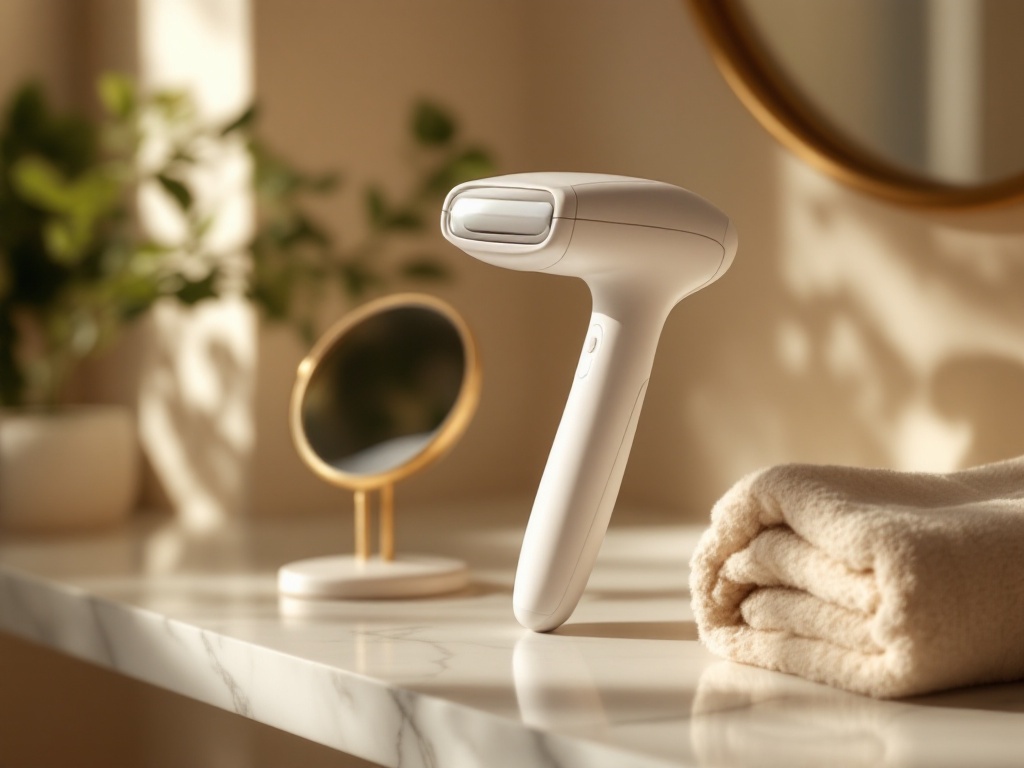
The at-home light device market has grown from a curiosity into a crowded shelf. Handheld IPL units, originally marketed for hair removal, now advertise pigment correction among their uses, and dedicated home devices promise to fade sun spots between clinic visits or instead of them. The appeal is obvious: a one-time purchase in the price range of a single professional session. What the marketing rarely explains is what was removed from the device to make it safe enough to sell without a license, and what that subtraction means for your spots.
The Power Gap Is the Whole Story
Professional IPL and Q-switched platforms deliver energy measured in tens of joules per square centimeter, with cooling systems and calibrated filters that let a trained operator push enough energy into pigment to break it apart without burning the surrounding skin. Home devices are engineered in the opposite direction. To be sold for unsupervised use, their fluence is capped at a small fraction of clinical output, typically several times lower than the settings a dermatologist would choose for a lentigo. That cap is not a defect; it is the safety mechanism. But melanin does not grade on effort. Below a certain energy threshold, pigment is warmed rather than shattered, and a dense, established age spot mostly shrugs it off.
What the Evidence Actually Shows
The published data on home light devices comes largely from hair-removal trials, where the low-energy approach genuinely works because hair follicles respond to repeated modest heating. The pigment data is thinner and less impressive. Small studies and manufacturer-run trials report modest lightening of faint, superficial lentigines in fair skin after many weeks of repeated use. That matches what dermatologists observe: a home device can soften a light spot that a clinic laser would clear in one or two sessions, and it does very little against the darker, older spots that drive most people to seek treatment in the first place. The honest framing is that these devices occupy the same tier as strong over-the-counter topicals: real but slow and partial, not a substitute for professional clearance.
The Risks Nobody Puts on the Box
Two cautions deserve more attention than they get. The first is skin tone. Home IPL units are broadband light, and the same selectivity problem that makes clinical IPL risky in medium and deeper skin applies at home, without an operator to notice early warning signs. Several manufacturers simply advise against use on darker skin tones, and that advice belongs in bold. A burn or a patch of post-inflammatory darkening is a poor trade for a spot.
The second caution is diagnostic. A clinic visit begins with a dermatoscope precisely because a small fraction of spots that look like lentigines are not. A home device pointed at an undiagnosed lesion skips that safeguard entirely, and repeatedly lightening a melanoma while it grows is the worst-case scenario in all of pigment care. Any spot that is new, changing, or different from its neighbors should see a dermatologist before it sees any light source.
Where a Home Device Genuinely Fits
Used on medically boring, previously evaluated spots in fair skin, with realistic expectations and diligent daily sunscreen, a home IPL unit can nudge faint pigment in the right direction and may help hold results between professional treatments. That is a legitimate, narrow role. The people most satisfied with these devices tend to be the ones who bought them for maintenance, not removal.
The Bottom Line
At-home light devices are not a scam, but they are not a clinic in a drawer either. The engineering that makes them safe to sell is the same engineering that limits what they can clear. For faint spots on fair, dermatologist-checked skin, they offer slow and modest help. For the defined, years-old lentigo on a cheekbone or hand, the physics still favors the professional device, and the money usually does too.
Related reading: At-home vs. in-office fading: an honest comparison.