
Explainer · August 10, 2026 · 5 min · By Marisol Etcheverry
IPL vs. Q-Switched Lasers for Age Spots: What Actually Separates the Two
Both technologies target melanin, but they do it in different ways, with different tradeoffs in precision, downtime, and risk. Here is how clinicians actually choose between them.
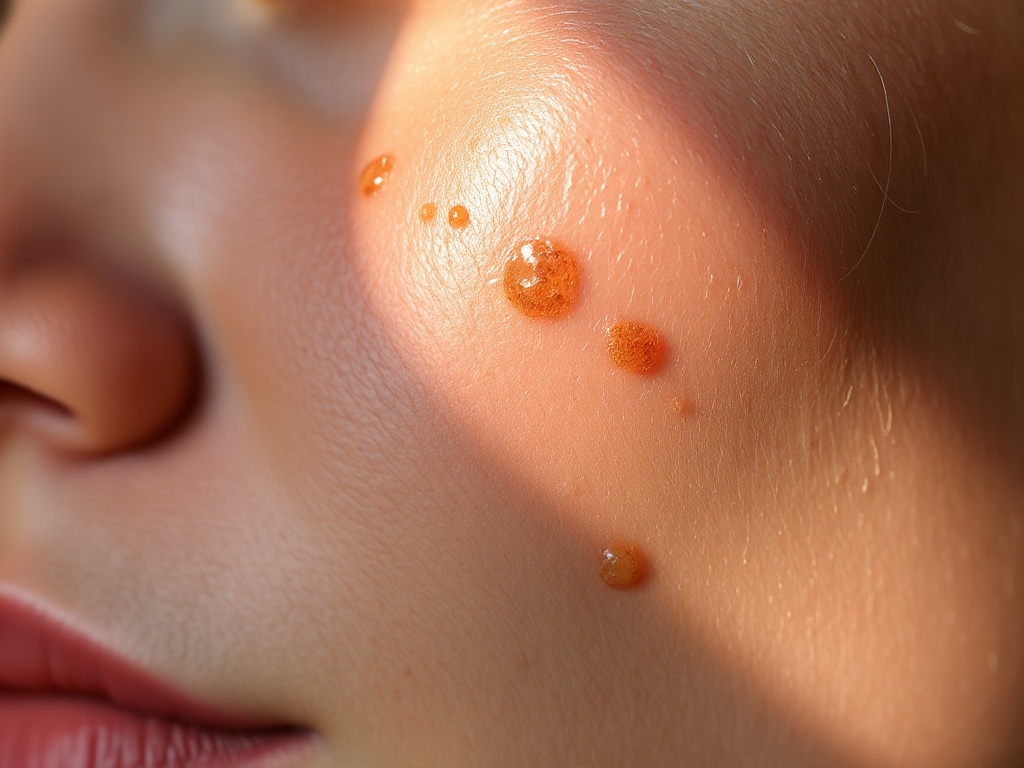
If you have looked into professional removal of solar lentigines, the flat brown spots most people call age spots, you have almost certainly encountered two options: intense pulsed light, usually shortened to IPL, and Q-switched lasers. Marketing materials often present them as interchangeable. Mechanistically, they are not, and understanding the difference explains why one patient walks out with faint pink marks that fade in days while another develops crusting that lasts two weeks, or why a spot returns for one person and stays gone for another.
Start with the target. Both technologies work through selective photothermolysis, the principle that light of the right wavelength, delivered fast enough, heats a specific pigment before that heat can spread to surrounding tissue. In age spots, the target is melanin concentrated in the basal layer of the epidermis. Melanin absorbs light broadly across the visible spectrum, which gives clinicians flexibility in wavelength choice. The critical variable is not just wavelength but pulse duration, meaning how quickly the energy is delivered.
IPL is a broadband flashlamp, not a laser. It emits a spread of wavelengths, typically filtered to a range such as 500 to 1200 nanometers, delivered in pulses lasting milliseconds. That millisecond timescale is long relative to the thermal relaxation time of individual melanosomes, the tiny packets that store melanin. In practice, IPL gently cooks pigmented cells rather than shattering them. The treated spot darkens over a few days, forms a fine coffee-ground crust, and flakes off within one to two weeks. Because IPL covers a large treatment window per flash, it suits diffuse sun damage across the cheeks, chest, or hands, where dozens of spots coexist with background redness. The broadband output also targets hemoglobin, so IPL can address vascular flushing in the same session.
Q-switched lasers work on a different timescale entirely. Q-switching is an engineering technique that compresses laser energy into nanosecond pulses, thousands of times shorter than IPL pulses. At that speed, the energy arrives faster than melanosomes can dissipate heat, creating a photoacoustic effect that mechanically fragments the pigment. Common wavelengths include 532 nanometers, which is strongly absorbed by superficial melanin, and 1064 nanometers, which penetrates deeper. Picosecond lasers, a newer generation, push pulse durations shorter still and rely even more on mechanical fracture than heat. For a discrete, well-defined lentigo, a single Q-switched pass frequently clears the spot in one to two sessions, compared with the three to five sessions IPL often requires for equivalent clearance.
So why not always choose the laser? Three reasons. First, precision cuts both ways. Q-switched treatment of an individual spot can leave a temporary halo of lighter skin if settings are aggressive, and treating fifty scattered spots one by one is tedious compared with an IPL pass over the whole area. Second, skin tone matters enormously. In deeper skin tones, Fitzpatrick types IV to VI, both technologies carry risk, but the intense localized energy of Q-switched devices at 532 nanometers can trigger post-inflammatory hyperpigmentation, a rebound darkening that can outlast the original spot by months. Experienced clinicians in these cases often shift to 1064 nanometers, lower fluences, longer treatment intervals, or avoid light-based treatment entirely in favor of topical regimens. IPL in darker skin types is broadly considered higher risk because its wide wavelength band is absorbed by the abundant background melanin, not just the spot. Third, downtime profiles differ. Q-switched treatment typically causes immediate frosting or whitening of the spot followed by a scab, which some patients find more conspicuous than the subtle darkening after IPL.
One caveat matters more than the technology choice. Neither device should touch a pigmented lesion that has not been evaluated. Lentigo maligna, an early form of melanoma, can closely mimic a benign age spot, and a light-based treatment can partially lighten it, delaying diagnosis while the malignancy continues to grow. Any spot that is new after age 60, growing, irregular in border or color, or simply different from its neighbors warrants dermoscopic evaluation, and sometimes biopsy, before cosmetic treatment. This is the single most important safety step in the entire process, and it is the one most often skipped in non-medical settings.
The practical bottom line: IPL suits widespread, mild to moderate photodamage on lighter skin, accepting more sessions in exchange for even-field treatment and simultaneous redness reduction. Q-switched and picosecond lasers suit discrete, stubborn spots and offer faster clearance per lesion, with more operator skill required to manage settings, especially in medium and deeper skin tones. Recurrence is possible with both, because the treatment removes accumulated pigment but not the sun-damaged melanocytes that produced it. Daily broad-spectrum sunscreen after treatment is not optional aftercare, it is the mechanism that keeps the result.
Related reading: IPL vs Q-Switched Lasers for Age Spots: What Actually Happens Under the Skin.
More in Explainer
View all →- What Are Age Spots, Really? Three Definitions, and Where They Disagree
- Why a Treated Age Spot Can Come Back Darker, and What That Actually Means
- IPL vs. Pigment Lasers for Age Spots: What Actually Differs Under the Skin
- IPL, Q-Switched, or Picosecond: How the Three Main Light Treatments for Age Spots Actually Differ